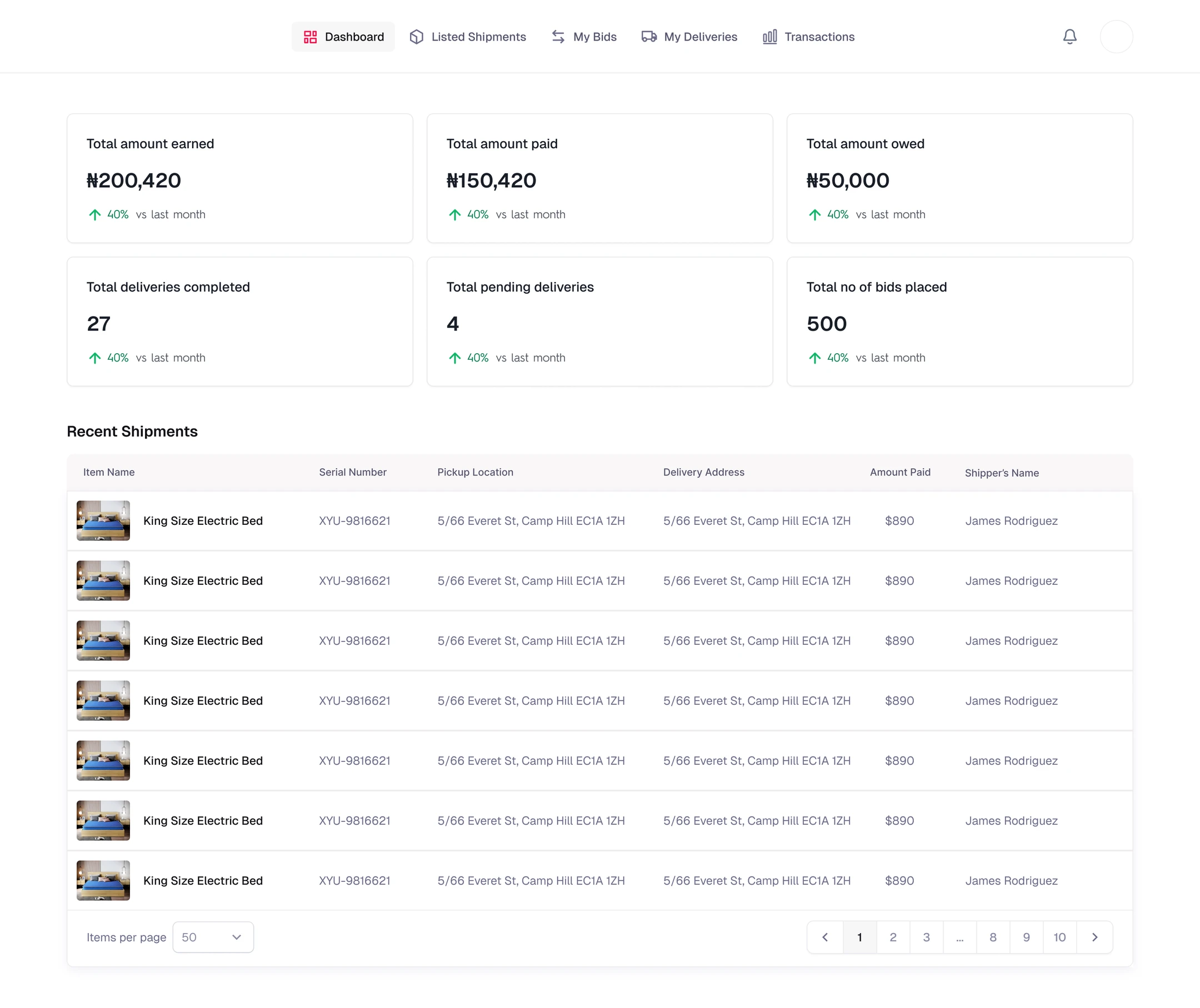
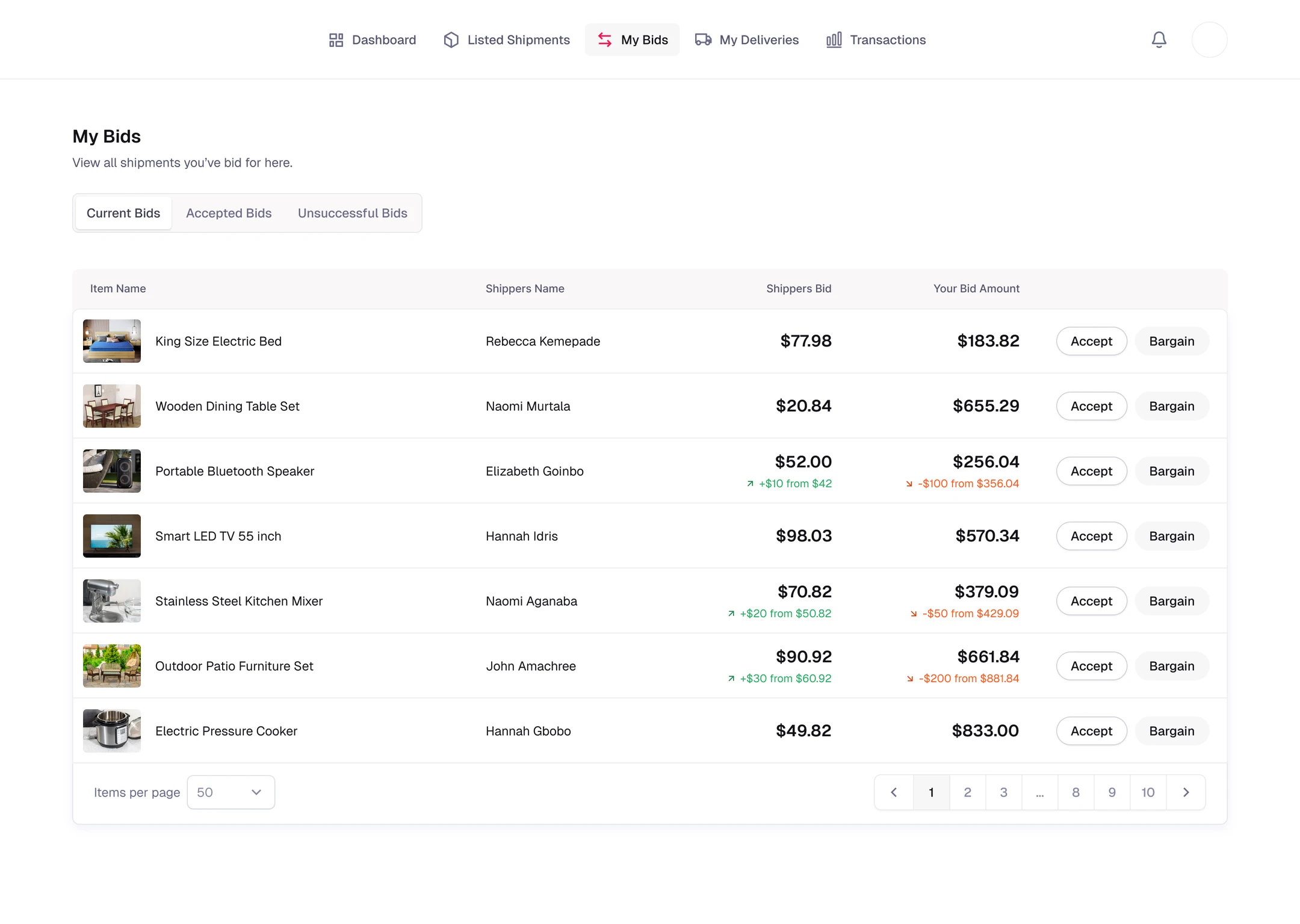
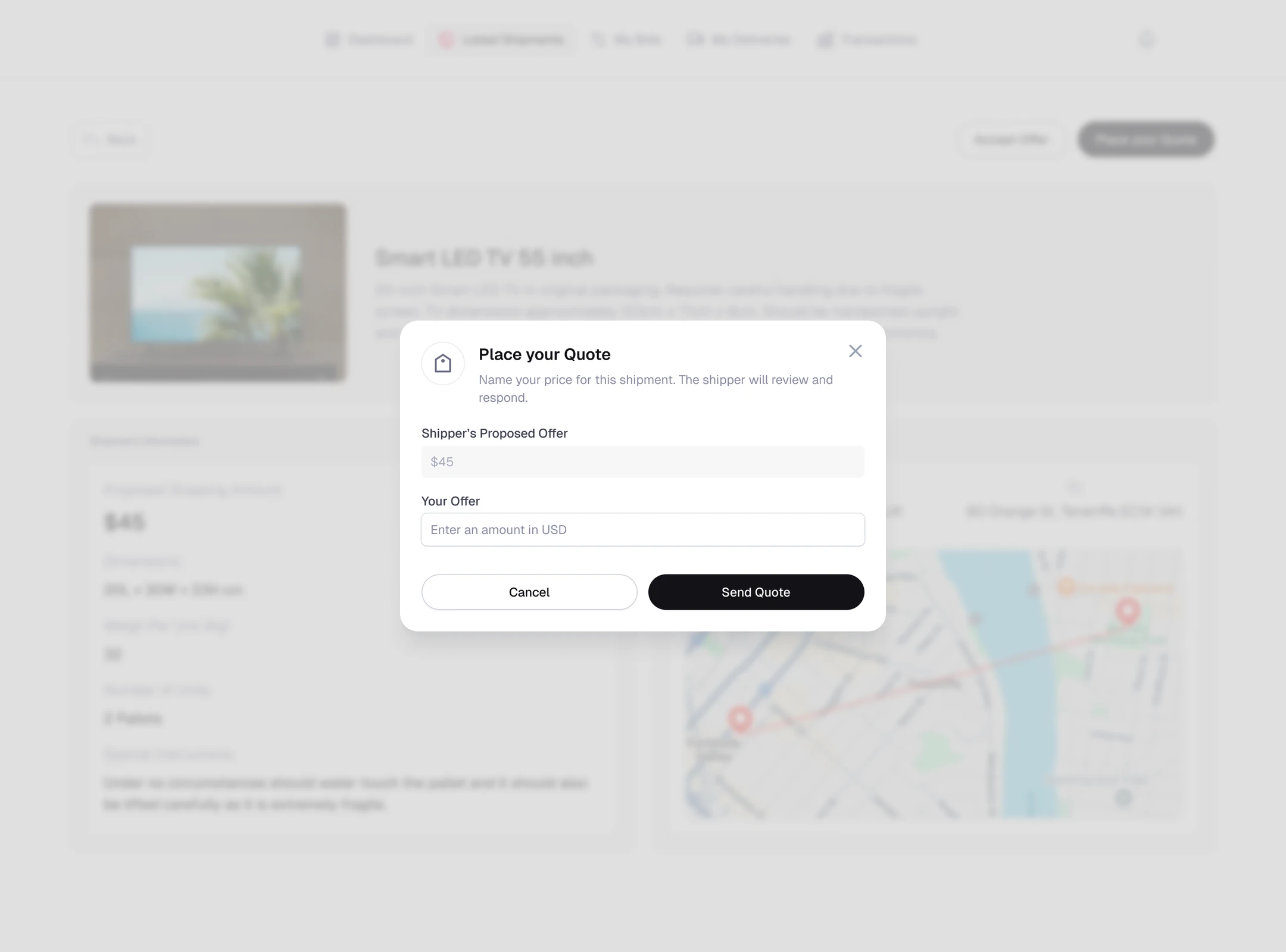
PNLHub connects people who need goods moved with transporters who have the trucks. I designed both web apps, the shipper's and the transporter's, as an MVP in two months, so a single shipment could be created, bid on, agreed and tracked from either side.

 -$20 from $540

 +$100 from $45

One shipment, two completely different users.
The goal was to help shippers get a load moved, and transporters find work that fits their trucks, inside one product. Both web apps shipped as an MVP in two months.
One transaction, seen from opposite ends.
Moving goods takes two parties: someone who needs something moved, and someone with a vehicle to move it. The MVP brief brought the whole transaction into one platform: creating a shipment, discovering transporters, bidding and negotiating, tracking, notifications and ratings.
The opportunity wasn't two dashboards. It was one transaction that two people see from opposite ends.
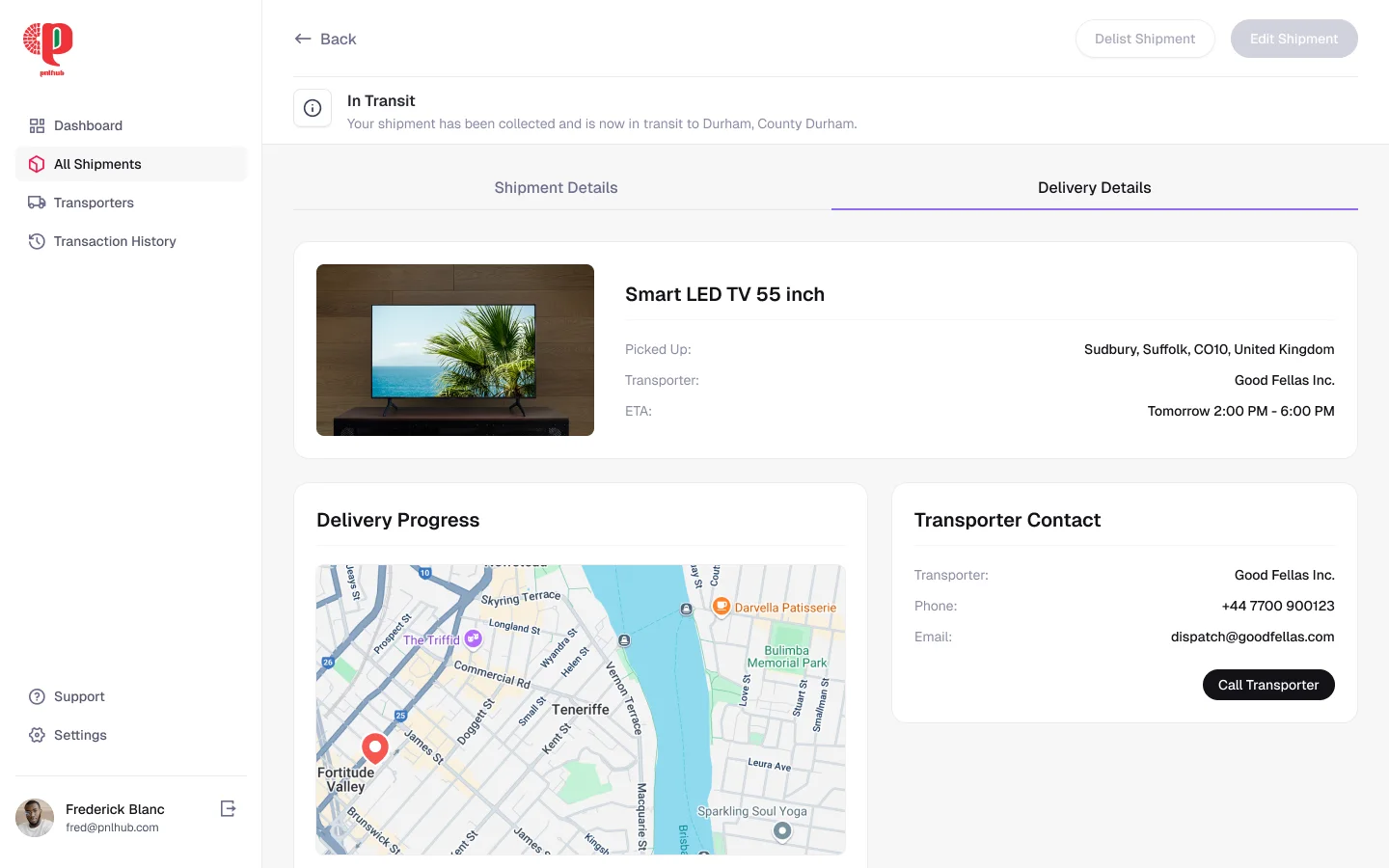
Status, not GPS.
The minimum a transporter needs before bidding (size, weight, pickup and destination) set the shipment form. Tracking in the MVP was status-based rather than live GPS, so three states, Booked, In transit and Delivered, had to feel trustworthy without a map. Escrow payments, route optimisation and AI matching were deliberately left out of the MVP.
“When I have goods to move, I want to post the job once and choose a transporter I trust, so I'm not chasing drivers by phone.”
“When my truck is free, I want to find loads that fit it and agree a fair price fast, so I'm not driving empty.”
- 01
How might we make it simple for shippers to create and manage transport requests?
- 02
How might we help transporters discover relevant shipments and manage the deliveries they accept?
- 03
How might we make both sides feel like one connected transaction?
Bid, bargain, accept.
The shipped flow mirrors itself on each side, so a bid always means the same thing to both people.
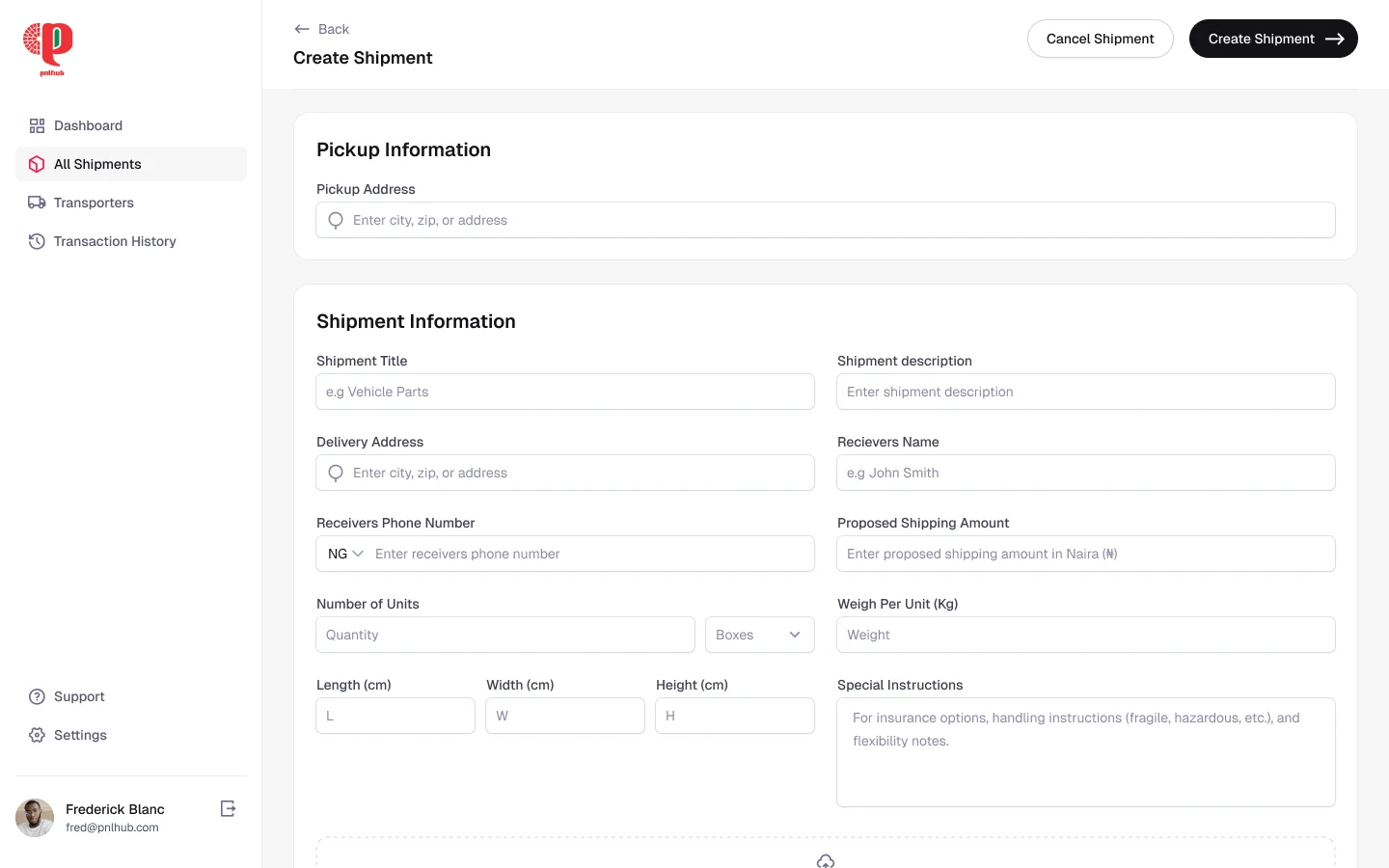
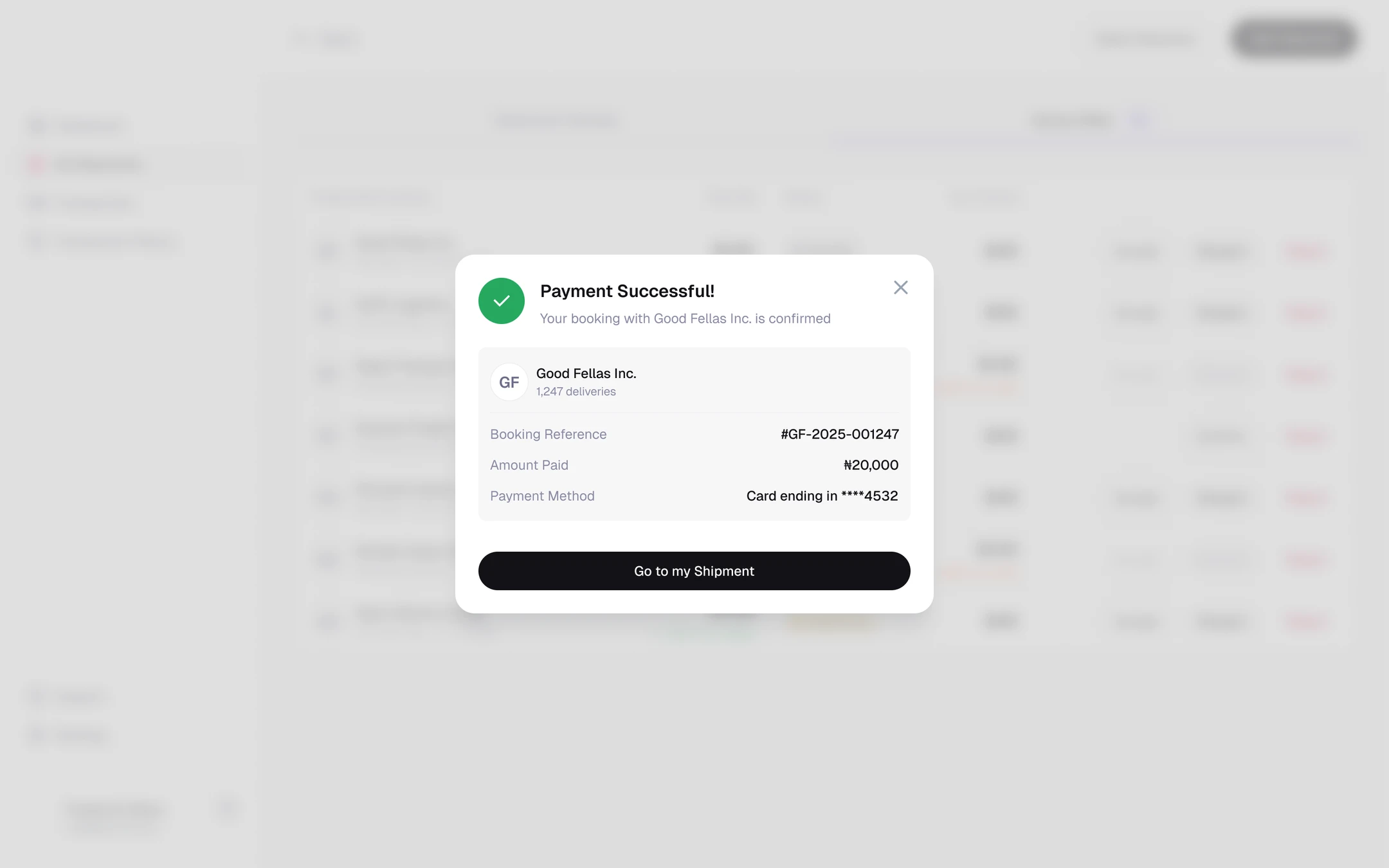
What shipped, and what waited.
Shipped in the MVP
- Shipment creation
- Shipment marketplace for transporters
- Bidding and negotiation
- Status tracking, Booked to Delivered
- Transaction history on both sides
Next
- Real-time tracking and route optimisation
- AI shipment matching and pricing
- In-app payments and escrow
- Analytics and reporting
- Support and dispute resolution
- 01
Design systems, not screens.
The same shipment looks different depending on who's holding it. A shipper creates, evaluates and monitors it; a transporter discovers, bids for and delivers it.
- 02
States are the shared language.
Booked, In transit and Delivered had to mean the same thing in both apps.
- 03
Two interfaces, one product.
The hard part wasn't designing two apps. It was making them behave as one.